Robots Meta Tag
What is a robots meta tag?
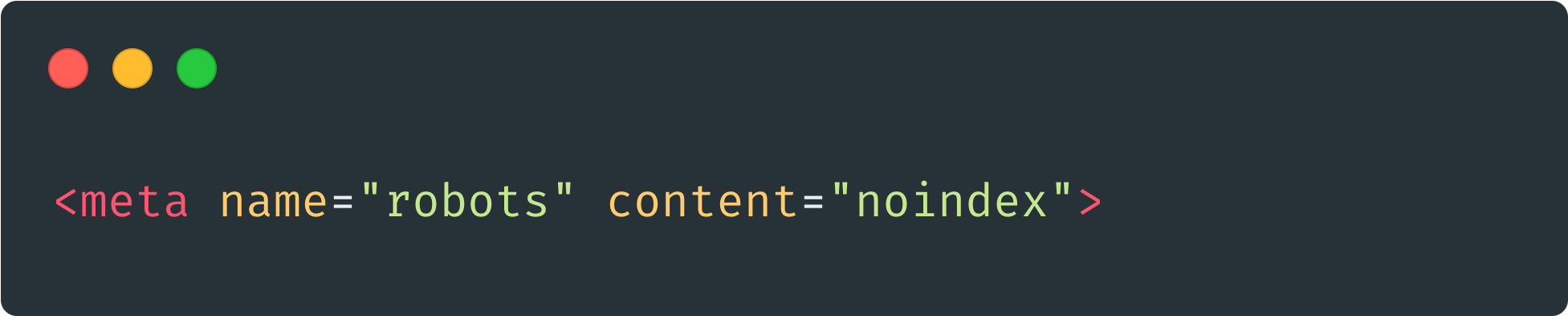
A robots meta tag provides indexing and serving rules for individual pages to search engine bots.
Why robots meta tags matter for SEO
Unlike robots exclusion, which requests bots not to crawl pages, robots meta tags provide page-by-page granular indexing and serving rules when a page is crawled. The rules can specify if the page should be indexed, if the links should be followed, and if the page should be cached. The rules can also influence search result appearance, translation, and embedded iframe content.
Robots meta tag rules used by Google
all– No restrictionsnoindex– Don’t indexnofollow– Don’t follow linksnone– Don’t index or follow linksnoarchive– Don’t cache in search resultsnositelinkssearchbox– Don’t show a sitelinks search boxnosnippet– Don’t show a text snippet or video previewindexifembedded– Allows indexing of embeds on pages when the embed source also usesnoindexmax-snippet: [number]– Limits or excludes text snippets in search resultsmax-image-preview: [number]– Specifies the size of the image preview or requests no image previewmax-video-preview: [number]– Specifies the number of seconds for a video preview or requests no video previewnotranslate– Don’t translate page title and meta descriptionnoimageindex– Don’t index images on pageunavailable_after [date/time]– Specifies data and time to begin excluding page from search results
Robots meta tag tips
- The unintentional use of the
noindexdirective on pages is a common cause for pages not being indexed, especially on enterprise sites. Always check the page to ensure it’s not being used. - A robots meta tag won’t keep a page from being crawled. If you don’t want a page to be crawled, exclude it in robots.txt or password-protect it.
Robots meta tag resources
Recommended reading
Written by Jon Henshaw, published on , and last updated on .