Localization
What is localization?
Localization is publishing content in different languages and for other regions in a way that is optimized for search engines and visitors.
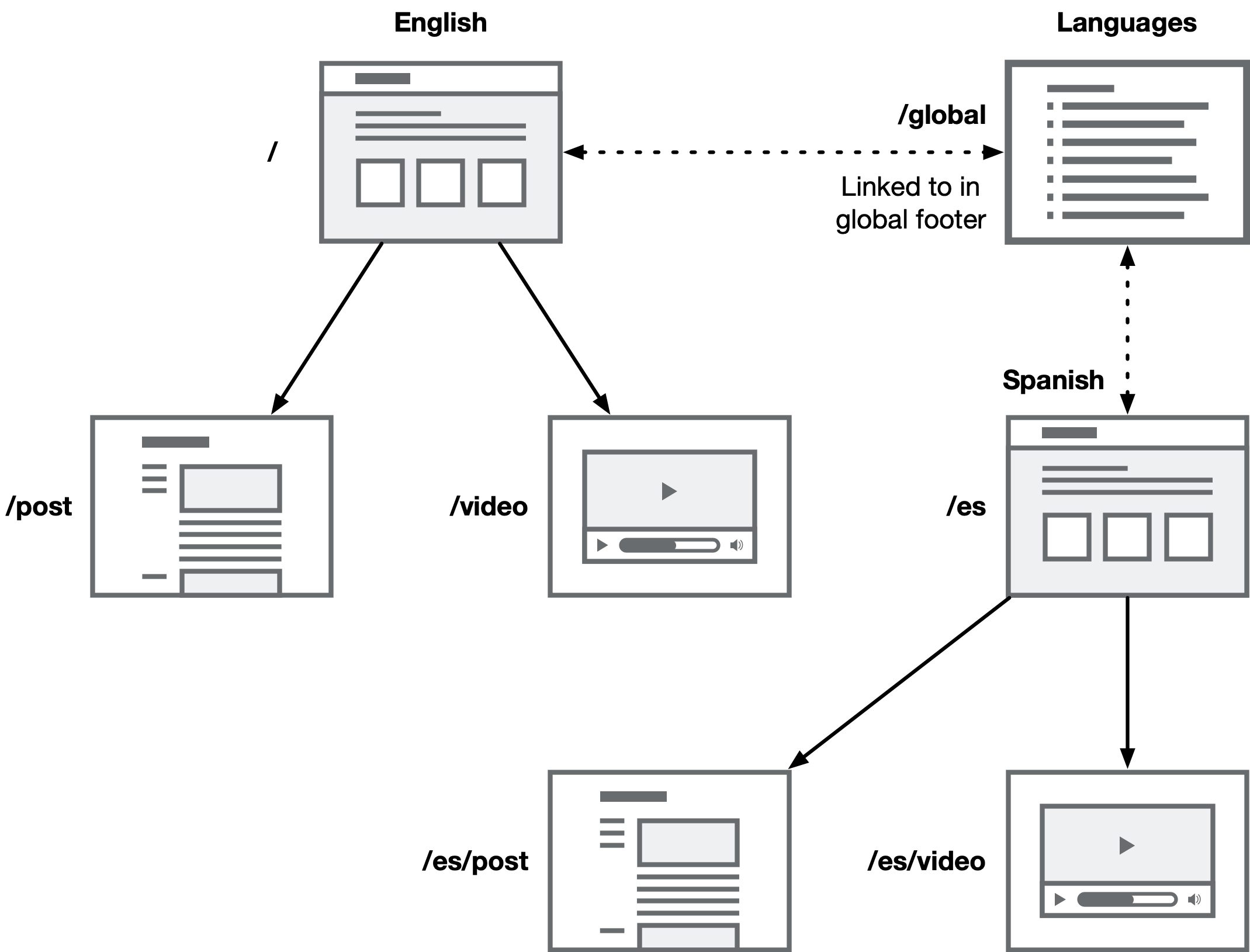
Why localization matters for SEO
Properly localizing content will ensure search engines return pages matching a searcher’s language and region. Not implementing localization correctly may return the wrong localized page or no page at all.
Localization tips
- Avoid using language-based redirects and geo-redirects because they can confuse and keep search engine bots from discovering and indexing all locales. They also force the locale on the visitor when they may prefer to remain in the locale they visited. Instead, consider using a banner like Apple, which detects if the language and region are different from the page they’re viewing and gives them the option to switch the locale or stay and close the banner. Ensure the banner is only displayed to visitors, not search bots (Note: Doing so is an acceptable, benign, and beneficial form of situational cloaking that will pass a manual check).

- Use a single language on a page and in the HTML. For example, ensure pages in a Spanish language locale do not contain any English on the page or in the HTML metadata.
- Use regional signals on the page and in the metadata. If the locale is specific to a region, like a country, include the country in the page title, breadcrumb links, main content, and in the footer. Including a locale-related address on the page is also a regional signal.
hreflang tips
- If a page has four localized versions (e.g., English, Spanish, German, and French), all four pages must include hreflang links to all four pages. That includes a self-referencing hreflang link (e.g., The Spanish page should have an hreflang link to itself, the English page should have an hreflang link to itself, etc.).
- The x-default hreflang link should point to the primary localized version, which is typically the English version at the domain’s root for U.S.-based sites. X-default should be used in addition to the English hreflang link, not a substitute.
- All hreflang links should use fully qualified URLs, not relative URLs.
Localization resources
Online guides
WordPress plugins
Written by Jon Henshaw, published on , and last updated on .